

There was a woman who would often tell my mother, with a sense of pride, that she kept a strict watch over her children. She knew exactly where her son went, who his friends were, and how he spent his time. She would even say that although he had reached matriculation, he would not get a haircut without her permission.
She once proudly shared that whenever her son left home saying he was going for prayer, she would quietly follow him to the mosque to ensure that he was truly going there and not wandering around with friends.
Listening to such lectures on parenting would often leave my mother emotional, and at home, they would trigger a fresh round of comparisons and criticism.
However, the situation took an unexpected turn one day. It was reported that her son had left home for the Zuhr prayer and had not returned. At that time, he had barely completed his intermediate studies and had likely just started a new job. My mother came home worried and said, “May God protect him—my friend’s son went out for Zuhr prayer and hasn’t come back yet.”
An entire day passed, and the family was on the verge of printing missing-person posters. Then, the following day, after Asr, he contacted his younger brother and delivered a message: “Tell Mother that I have gotten married and am now living as a resident son-in-law.”
What followed at their home was a drama of its own. I would often say to my mother, half humorously, “He may have asked for permission before getting a haircut—but he certainly didn’t ask before bringing disgrace.”
In a similar instance, we had some distant relatives. We lived in Lalukhet, while they resided in a bungalow in Gulshan-e-Iqbal. They would occasionally visit us on Eid, arriving in a polished car, greeting our grandmother, and leaving shortly afterward.
Their son would accompany them, but they would never allow him to mix freely with me and my cousins. In their eyes, we were unruly street kids from Lalukhet, while their son was a carefully raised, sheltered child.
They only turned to us when their son went missing. They handed us small posters and asked us to paste them around the streets. They were in tears. My cousin and I rode bicycles through the neighborhood, putting up those missing posters. Later, it was discovered that the boy had gone to Lahore to play cricket—without informing anyone.
Just a few days ago, I saw another boy who had probably only recently been issued his national identity card. His mother was so consumed with monitoring him that she never left him alone, constantly advising, correcting, and supervising him. Yet, I saw him standing at a roadside kiosk, smoking a cigarette. I chose to walk past silently.
I want to say this to parents—especially mothers: only a prisoner constantly thinks about escape. If your child feels imprisoned, then sooner or later, they will find a way to break free. And when they do, they will not see you as a well-wisher, but as a warden—someone they will ultimately rebel against.
I have spent time with all kinds of people throughout my life. By the grace of God, I was protected from wrongdoing. The reason was simple: my parents trusted me. I spent entire days roaming the streets with friends and encountered all kinds of influences from childhood through university. Yet, my parents never doubted my character, nor did they overindulge me. Because of that trust, I always tried my best not to betray it.
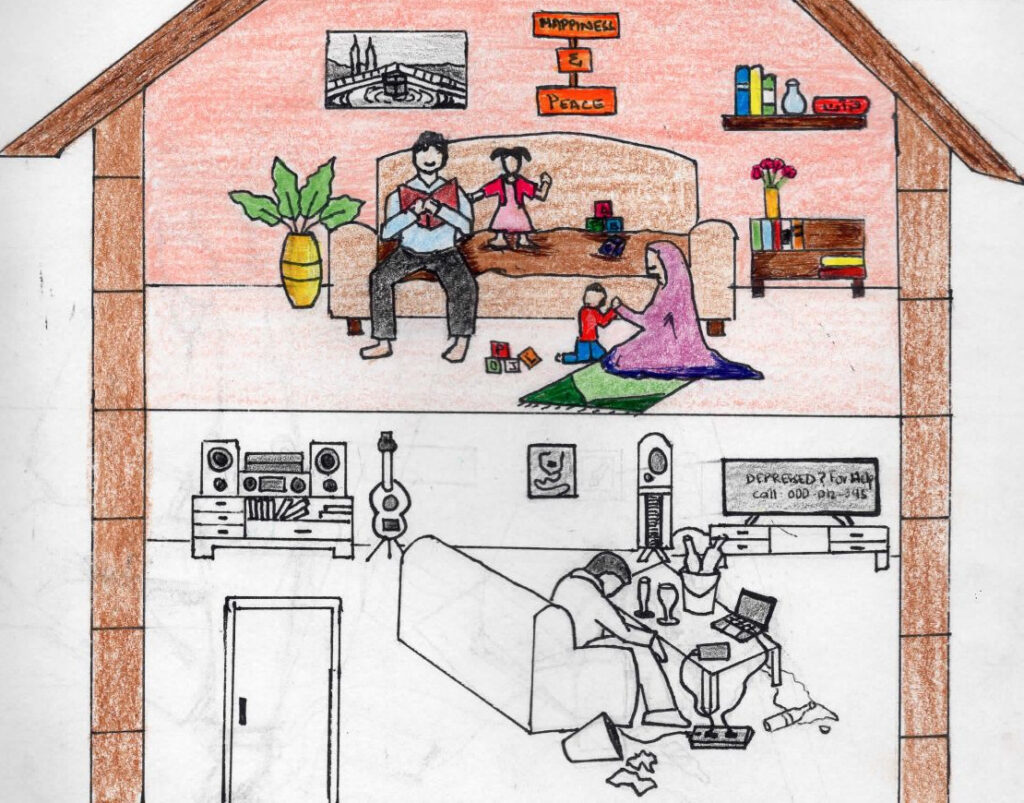
Unfortunately, many parents equate constant surveillance with good parenting. They doubt their children, confine them in the name of discipline, and believe that providing material comforts is sufficient. But the truth is, no comfort can replace the freedom to live and the experience of being trusted.
On the other hand, another group of parents has emerged—those who, in the name of being “friends,” grant their children unchecked freedom. Effective parenting lies between these two extremes. It requires setting clear boundaries, enforcing discipline where necessary, and placing limits in certain areas—while still allowing meaningful freedom within those boundaries, along with proper guidance and accountability.
If a child makes a mistake—even after repeated advice—or causes harm, you may correct them in every possible way, but you must never damage their self-respect.
It is also important to understand that raising children and building character are not the same. Love for one’s children is natural and God-given, which makes nurturing them a necessity. However, building character is a conscious and learned responsibility. It cannot be achieved through conventional wisdom alone, nor through emotional attachment. While love fulfills a child’s basic needs, it cannot, by itself, address their spiritual growth, moral refinement, and inner development.
For that, parents must invest in their own self-development. Otherwise, we may believe we are raising our children well, while in reality, we are pushing them away. And in the end, instead of well-raised children, we may be left with nothing but loneliness.